
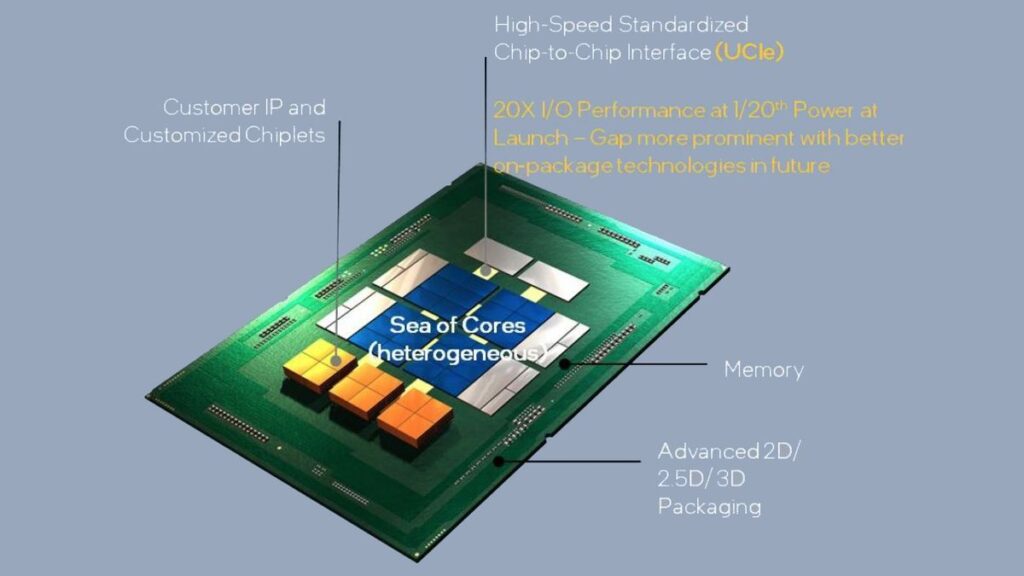
The semiconductor industry is increasingly shifting toward modular architectures to overcome the limitations of traditional monolithic chips. In this evolving landscape, chip design strategies are adopting chiplet-based approaches that allow different functional components to be developed separately and later integrated into a unified system. While standards such as UCIe aim to streamline communication between chiplets, achieving true interoperability across diverse vendors, technologies, and packaging environments remains a complex engineering challenge.
Chiplet Architectures and System Integration Complexity
Chiplet-based systems promise improved scalability and design flexibility, but they also introduce new challenges in integration and compatibility. When multiple chiplets from different design teams or vendors are combined into a single package, maintaining consistent communication, synchronization, and performance becomes more demanding.
- Heterogeneous Integration Requirements
Chiplets often originate from different fabrication processes and technology nodes. Integrating them within a unified package requires careful planning to ensure electrical compatibility and balanced performance. Without alignment across manufacturing technologies, system integration may introduce unexpected performance limitations. - Synchronization Across Multiple Functional Blocks
Each chiplet may operate with its own timing characteristics, clock domains, and communication protocols. Ensuring that these elements work together requires detailed synchronization strategies. Without proper coordination, data exchange between chiplets may experience latency or reliability issues. - Thermal Distribution Challenges
Multiple chiplets operating within the same package generate varying heat profiles. Engineers must carefully manage heat dissipation to avoid thermal hotspots that could reduce system stability or degrade long-term performance.
Limitations of Interconnect Standardization
UCIe provides a standardized interface for chiplet communication, but interoperability involves more than simply connecting components through a common protocol. Integration challenges often emerge in areas beyond the scope of the interconnect standard.
- Incomplete Coverage of System Requirements
Interconnect standards mainly define communication pathways, leaving other system requirements, such as power delivery and packaging compatibility, outside their scope. As a result, engineers must address several integration challenges independently. - Variations in Vendor Implementation
Even when companies adopt the same interconnect protocol, implementation methods may differ significantly. These variations can introduce subtle compatibility issues that complicate system validation and testing. - Complex Validation Processes
Chiplet systems require verification at multiple stages, including individual chiplets, interconnect links, and complete packages. Coordinating these validation stages increases engineering complexity during development.
Physical Layout Considerations in Advanced Semiconductor Systems
Successful chiplet integration relies heavily on careful physical layout planning. In advanced semiconductor development, VLSI physical design plays a critical role in organizing placement and connectivity across multiple chiplets within a package.
- Optimized Chiplet Placement Strategies
The placement of chiplets affects signal latency, thermal distribution, and packaging efficiency. Strategic layout planning ensures that communication paths remain efficient while maintaining mechanical and electrical stability. - Signal Integrity Across High-Speed Interfaces
Chiplet interconnects must handle extremely high data rates. Proper routing techniques and spacing strategies are essential to prevent signal degradation and maintain reliable communication between chiplets. - Manufacturing Alignment With Layout Constraints
Physical layout decisions directly influence manufacturing feasibility. Incorporating VLSI physical design considerations early in development ensures that designs remain compatible with fabrication and packaging processes.
Packaging and Board-Level Integration Dependencies
Chiplet-based systems extend beyond silicon packaging and interact with broader electronic platforms. This integration requires coordination between packaging strategies and PCB engineering practices to ensure reliable system operation.
- Power Delivery Coordination
Chiplet architectures often require complex power distribution networks. Effective board-level design ensures that each chiplet receives stable power while minimizing noise and voltage fluctuations. - Signal Routing Between Package and Board
The connection between chiplet packages and printed circuit boards must maintain high signal integrity. Proper routing and impedance control are essential for reliable communication between system components. - Thermal Management Through System Design
Heat generated within chiplet packages must be efficiently transferred away from the system. Board-level materials and layout strategies help distribute thermal loads across the platform.
Verification Challenges in Chiplet-Based Systems
Testing chiplet-based architectures introduces new complexities compared with traditional monolithic chips. Each chiplet must be validated individually and then evaluated as part of the complete system.
- Multi-Level Validation Processes
Engineers must test chiplets separately before verifying the integrated package. This layered testing approach ensures that each component functions correctly before system-level validation begins. - Interface Compatibility Testing
Even when chiplets follow standardized communication protocols, subtle implementation differences may affect interoperability. Rigorous testing helps identify these issues before deployment. - Reliability Evaluation Over Time
Chiplet packages are exposed to thermal cycles, mechanical stresses, and varying workloads. Long-term reliability testing ensures that integrated systems maintain performance throughout their operational lifespan.
Industry Collaboration and Ecosystem Development
The success of chiplet ecosystems depends heavily on collaboration among semiconductor companies, design service providers, and system integrators. Shared innovation helps address interoperability challenges that individual organizations may struggle to solve independently.
- Development of Shared Integration Frameworks
Collaborative frameworks help define guidelines for packaging, testing, and system integration. These shared standards simplify chiplet compatibility across multiple vendors. - Standardization Beyond Interconnects
While communication protocols are important, additional standards are required for areas such as packaging formats, power delivery methods, and validation procedures. - Open Innovation Environments
Cross-industry collaboration encourages faster technological progress by allowing companies to share expertise and refine integration methodologies.
Future Directions in Chiplet Platform Development
As chiplet architectures continue to evolve, engineers must address broader system-level considerations that extend beyond communication interfaces. Long-term success will depend on scalable design frameworks and stronger integration strategies.
- Performance and Efficiency Balance
Future semiconductor systems must deliver high performance while maintaining energy efficiency. Balanced design strategies ensure that chiplet architectures remain scalable. - Scalable Modular Platforms
Chiplet-based architectures enable modular upgrades and system customization. Designing flexible platforms allows companies to adapt quickly to evolving technological requirements. - System-Level Integration Expertise
Effective collaboration between semiconductor engineers and PCB engineering specialists ensures that chiplet platforms operate reliably within complete electronic systems.
Conclusion
Chiplet-based architectures are transforming semiconductor development by enabling modular design, faster innovation, and improved scalability. However, true interoperability requires more than standards like UCIe; it also depends on coordinated physical design, advanced packaging, validation, and system-level engineering. As systems grow more complex, strong integration strategies and advanced PCB engineering capabilities are essential to ensure reliability and performance.
In this evolving landscape, experienced engineering partners play a vital role in bridging the gap between concept and production. Tessolve stands out with its deep expertise in semiconductor engineering, validation, and hardware development, helping organizations build advanced electronic platforms and accelerate innovation in next-generation chiplet-based technologies.
