
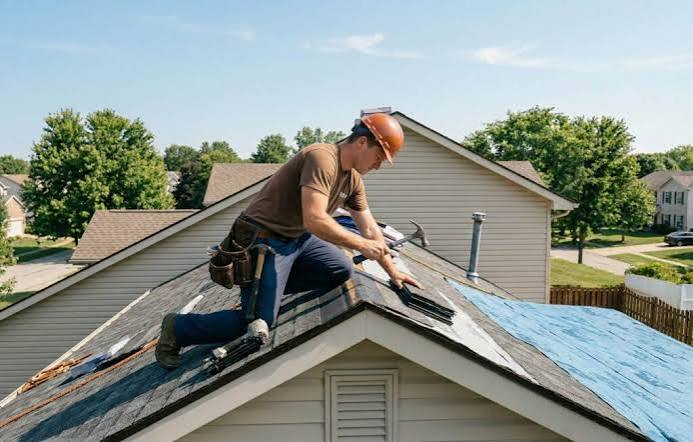
Every summer, the same pattern plays out across homes in the Sun Belt, the Southeast, and the mid-Atlantic: homeowners notice staining on ceilings, feel humidity seeping through attic spaces, or find cracked surfaces along their flat or low-slope rooflines. By the time these signs appear, the underlying problem has often been developing for months. The season does not create roof vulnerabilities — it exposes them.
Roof sealing is one of the most practical and cost-effective ways to protect a residential structure before thermal stress, UV exposure, and summer rainfall cycles push existing weaknesses to a breaking point. But it is also one of the most misunderstood areas of home maintenance. Homeowners frequently choose the wrong product type, apply it at the wrong time, or skip preparation steps that determine whether a sealant holds for two years or ten.
This guide is structured to help homeowners understand what roof sealing actually involves — not just which product to buy, but why surface condition matters, how different roof types respond differently, and what signals indicate a roof is ready for sealing versus one that needs repair first.
What Roof Sealing Actually Does to a Structure
Roof sealing is the process of applying a protective coating or compound to a roof’s exposed surface to reduce water infiltration, limit thermal absorption, and extend the functional life of the underlying substrate. It is not a repair method. A sealant cannot structurally reinforce a damaged deck or close a gap that requires flashing work. What it does well is create a continuous, weather-resistant membrane over a surface that is otherwise vulnerable to gradual degradation from UV rays, moisture cycling, and temperature swings.
For homeowners doing preliminary research, a well-structured Sealer Roof guide can clarify the distinction between coating types, application methods, and surface compatibility — which matters considerably more than most product marketing suggests.
Roofing substrates expand and contract with temperature changes. Asphalt, modified bitumen, single-ply membranes, and metal panels all move differently under heat load. A sealant formulated for one surface may not bond correctly to another, and a coating applied over a dirty or compromised surface will fail far sooner than expected. The chemical behavior of the sealant — how it cures, how flexible it remains after curing, how it responds to ponding water — determines its real-world performance far more than any marketing claims on the label.
The Difference Between Sealing and Waterproofing
These two terms are often used interchangeably, but they describe different levels of protection and different product categories. Sealing typically refers to surface coatings that reduce moisture absorption and UV breakdown on an otherwise intact roof. Waterproofing involves the creation of a fully impermeable barrier, often used on low-slope or flat roof structures where water can pool rather than drain quickly.
On a steep-slope asphalt shingle roof, a sealer roof application is appropriate for extending surface life and reducing granule loss. On a flat commercial-style residential roof or a low-pitch modified bitumen surface, a proper waterproofing membrane may be the more appropriate long-term solution. Treating these as equivalent leads homeowners to apply the wrong product, which creates a false sense of protection without addressing the actual vulnerability.
Why Summer Heat Accelerates Surface Degradation
UV radiation breaks down the binders in asphalt-based roofing materials at an accelerating rate as surface temperatures rise. A dark-colored roof in a southern state can reach surface temperatures well above ambient air temperature during peak summer hours. Over time, this repeated thermal stress causes materials to oxidize, become brittle, and lose their ability to shed water efficiently.
Sealer roof products with reflective or elastomeric properties help reduce this thermal load by reflecting a portion of solar energy rather than absorbing it. This does not eliminate heat transfer entirely, but it reduces the peak temperatures the substrate reaches, which extends the interval between re-application cycles and protects the roofing material underneath.
Assessing Your Roof Before Any Product Is Applied
Surface assessment is the step that most homeowners skip or underestimate. Applying a sealer to a roof that has active leaks, soft spots in the deck, failed flashing, or significant granule loss is unlikely to produce lasting results. In some cases, it can trap moisture already present in the substrate, accelerating decay from beneath while the surface looks sealed and intact from above.
A proper assessment looks at several distinct areas: the surface material itself, the condition of all penetrations and transitions, the drainage geometry of the roof, and any visible signs of prior patching or repair. Each of these factors affects whether sealing alone is appropriate or whether repair work should precede the coating application.
Reading the Signs of a Roof Ready for Sealing
A roof that is a good candidate for sealing will be structurally sound, relatively free of standing moisture, and showing early to moderate signs of surface wear rather than active failure. Granule accumulation in gutters, surface oxidation on modified bitumen, or minor surface cracking on an aging flat roof are the kinds of conditions sealing is designed to address.
Contrast this with a roof showing soft deck areas underfoot, visible daylight through the substrate, active interior water staining after rain, or severely deteriorated flashing around chimneys and vents. These conditions require correction before any surface coating will have meaningful benefit. Applying a sealer roof product over a structurally compromised surface delays a necessary repair while creating the appearance of a resolved problem.
Cleaning as a Structural Preparation Step
The adhesion of any roof coating depends directly on what the product is bonding to. Algae, moss, oxidized material, loose granules, chalk residue from prior coatings, and accumulated debris all reduce the contact area between the sealant and the substrate. Even a chemically appropriate product applied over a poorly cleaned surface will begin to fail at the edges and low points within a single seasonal cycle.
Cleaning a roof before sealing is not cosmetic preparation — it is a structural requirement. According to guidance published by the U.S. Environmental Protection Agency, biological growth on roofing surfaces including algae and lichen can contribute to material degradation over time, reinforcing the case for thorough surface treatment before any protective coating is applied. The method of cleaning — whether low-pressure washing, chemical treatment, or mechanical means — must be appropriate for the specific roofing material to avoid causing the very damage it is meant to prevent.
Choosing the Right Sealant for Your Roof Type
Not every sealant is appropriate for every roof type, and the consequences of mismatching product to surface are rarely immediately visible. A product may appear to apply correctly and look intact at installation, but adhesion failures, blistering, or cracking will appear within the first major thermal cycle if the chemistry is not compatible with the substrate.
Asphalt-based sealants are generally appropriate for asphalt shingle and built-up roofing systems. Elastomeric acrylic coatings are widely used on flat and low-slope roofs because of their flexibility under thermal movement and their compatibility with a range of single-ply and modified bitumen surfaces. Silicone-based products offer strong resistance to ponding water and UV, making them a common choice for low-slope installations where drainage is imperfect. Metal roofs typically require specific primers and coatings formulated to account for thermal expansion rates that differ significantly from membrane materials.
How Climate Region Affects Product Selection
A sealer roof product that performs reliably in a dry desert climate may not hold up as well in the high-humidity cycling conditions of the Gulf Coast or the freeze-thaw cycles of the upper Midwest. Humidity during application affects cure time and adhesion. Freeze-thaw movement places different demands on a coating’s flexibility than UV-dominated degradation does in arid climates.
Homeowners in coastal regions also need to account for salt air exposure, which accelerates corrosion on metal components and can reduce the effective lifespan of certain coating types. Understanding the dominant environmental stress your roof faces — heat, moisture, freeze-thaw, or salinity — provides a more reliable basis for product selection than relying on general-purpose descriptions alone.
Application Timing and Conditions
Roof sealants require specific temperature and humidity conditions to cure correctly. Most elastomeric and acrylic products need the surface temperature to be within a defined range and require the surface to be dry for an extended period before and after application. Applying a sealer roof coating immediately before a forecast rain event, or during early morning hours when dew is still present, compromises the cure and reduces adhesion.
Summer application in the US South and Southwest introduces an additional challenge: peak afternoon temperatures can cause some products to skin over before they fully bond to the substrate. Early morning application during summer months, after a period of dry weather and allowing several hours of cure time before peak heat, generally produces more consistent results than midday application in high-temperature conditions.
Maintenance Expectations After Sealing
Roof sealing is not a permanent fix. Every coating has a finite service life that varies depending on product type, application quality, roof geometry, and local climate exposure. Planning for re-inspection and eventual re-application is part of managing the roof as a functional system rather than treating the initial sealing as a closed task.
After a sealer roof application, the roof should be inspected at least annually, with particular attention paid to areas around penetrations, low points where water collects, and seams or transitions between different materials. These are the locations where coating failure tends to initiate first, and catching a localized failure early allows for targeted touch-up rather than full reapplication.
• Inspect flashing and penetration seals seasonally, as these areas see the most movement and stress independent of the coating itself.
• Clear gutters and drainage channels before and after major storm seasons to ensure water does not pool on sealed surfaces longer than the product was designed to handle.
• Document the product used, the date of application, and the surface conditions at the time of application — this information is essential for planning re-application timelines accurately.
• If the roof was professionally applied, confirm whether the installer’s documentation includes any maintenance requirements that affect coverage or warranty continuity.
Conclusion: Acting Before the Season Does
Summer does not create roof problems — it accelerates them. The cracks, separations, and moisture pathways that become visible after the first major heat wave or rainstorm were developing through the preceding months, often without any obvious exterior sign. Roof sealing, approached correctly, interrupts that process at a point where the cost and effort are still proportionate to the result.
The decisions that determine whether a sealing project succeeds — surface preparation, product selection, timing, and maintenance planning — are not complicated, but they require more deliberate attention than most homeowners typically give them. A coating applied to the wrong surface, under the wrong conditions, or with the wrong chemistry will not hold, regardless of the product’s listed specifications or the effort invested in the application.
Before summer heat peaks, the most productive action is not to purchase a product but to assess the roof honestly: its current condition, the specific vulnerabilities it carries, and what a realistic sealing project looks like for that particular structure in that particular climate. That assessment, done carefully and without rushing toward a quick fix, is what separates a sealing project that adds meaningful years to a roof from one that only appears to.
