
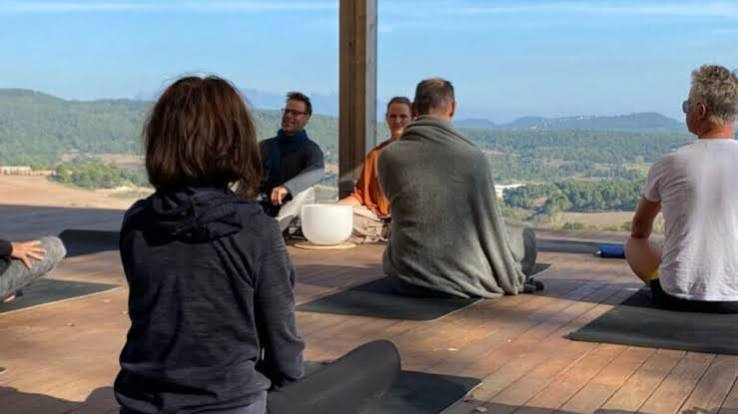
Planning a corporate retreat is one of those responsibilities that looks straightforward on paper but becomes complicated quickly once you factor in the real variables — team size, travel logistics, budget approval cycles, competing schedules, and the unspoken pressure to make it worthwhile. Most organizations approach the process the same way: pick a location that looks impressive, book it, and hope the program fills the space. That approach explains why so many retreats feel like obligations rather than opportunities.
The honest truth is that venue selection shapes the retreat experience more than most planners acknowledge. The physical environment affects how people engage, how much they rest, how willing they are to participate in sessions, and whether they leave feeling the time was worth it. Getting this decision right is not about finding the most scenic property or the most amenity-rich resort. It is about finding a place that fits the actual needs of your team and the actual goals of your program.
This guide walks through the key considerations that are often overlooked or underweighted in the typical venue search — the practical, operational factors that determine whether a retreat delivers value or simply consumes a budget line.
Understanding What a Corporate Retreat Venue Actually Needs to Do
A corporate retreat venue is not simply a backdrop. It is a functional environment that must support a range of activities simultaneously — structured sessions, informal conversation, individual downtime, group meals, and in many cases, travel coordination for people arriving from multiple locations. When those functions are treated as afterthoughts in the venue selection process, they become friction points during the event itself. Consulting a well-structured Corporate Retreat Venue guide before committing to a property can help clarify the criteria that matter most before your search narrows too quickly.
The core question to ask early is deceptively simple: what does this retreat actually need to accomplish? The answer defines the venue requirements. A leadership alignment session has different spatial and logistical needs than a team-building offsite for a department of thirty people. A strategy workshop for senior executives requires a different atmosphere than a morale-boosting retreat for a team that has been working remotely for two years. Without clarity on purpose, the venue search becomes a comparison of surface-level features rather than a match between function and environment.
The Gap Between Marketing Photos and Operational Reality
Most venue websites present their best version of themselves — full rooms, optimal lighting, rooms arranged for maximum visual impact. What those images rarely convey is how the space actually functions during a working day. How does sound travel between meeting rooms? Is the Wi-Fi infrastructure robust enough to support video calls and shared documents across multiple devices simultaneously? Are the catering and housekeeping teams experienced with corporate groups, or are they set up primarily for leisure travelers?
These are not minor concerns. A retreat where participants cannot reliably connect to their tools, where meals are delayed because the kitchen was not briefed correctly, or where breakout spaces are acoustically inadequate will undermine even the most thoughtful program. The operational details are the difference between an environment that supports focus and one that constantly creates small disruptions that accumulate across two or three days.
Location Logic — Proximity, Access, and the Cost of Travel Friction
The appeal of a remote or dramatically scenic venue is understandable. Distance creates psychological separation from the office, which can genuinely help people engage differently. But distance also introduces logistical complexity that is easy to underestimate during the planning phase. When team members are traveling from different cities or regions, the venue’s accessibility becomes a meaningful variable — not just in terms of cost, but in terms of arrival time, energy levels, and the actual start time of the first session.
A venue that requires a connecting flight and a long ground transfer may work well for a multi-day, immersive retreat where the journey is part of the experience. It works less well for a two-day working session where people need to arrive ready to contribute and leave without a full day of travel recovery. The location decision should follow the program design, not precede it.
Regional Venues and the Case for Familiar Distance
There is a growing recognition among experienced retreat planners that regional venues — those within a few hours’ drive or a direct flight from the home office — offer a more reliable return on investment for most corporate purposes. They reduce travel costs, simplify coordination, lower the risk of attendance gaps due to flight cancellations, and allow the budget to be redirected toward program quality rather than transportation logistics.
Familiar distance also lowers the threshold for participation. When a retreat requires minimal travel effort, more team members can attend without the logistical burden becoming a barrier. That broader participation often produces better outcomes than a smaller group at a more dramatic location.
Accommodation Structure and Its Effect on Team Dynamics
How participants sleep and what surrounds their non-program hours affects the quality of their engagement during scheduled sessions. This is not a soft consideration — it is a practical one. Accommodation that is uncomfortable, noisy, or insufficiently private will leave people tired and distracted. Accommodation that is over-the-top luxurious relative to the organization’s culture can create its own discomfort, particularly if the team has mixed seniority levels or the organization is going through a period of cost discipline.
The structure of the accommodation also affects informal interaction, which is often where the most valuable retreat conversations happen. A property where participants are spread across separate buildings or floors reduces the likelihood of spontaneous exchange. A layout where common spaces are easily accessible and comfortable encourages the organic conversations that structured programming alone cannot produce.
Single-Property Environments Versus Hotel Blocks
There is a meaningful operational difference between booking a block of rooms at a large hotel and booking a dedicated retreat property or lodge where your group is the primary or only occupancy. In a large hotel environment, participants share amenities with unrelated guests, common spaces are less controlled, and the property’s staff attention is divided. In a dedicated or semi-exclusive environment, the logistics are simpler, the atmosphere is more cohesive, and the venue team is focused entirely on your group’s needs.
Neither model is universally better, but understanding the difference matters before you commit. For retreats where group cohesion and focused engagement are central goals, dedicated environments tend to produce more consistent results. For retreats that are more logistically straightforward — a conference with a social component, for instance — a well-managed hotel block may be entirely adequate.
Meeting Space Quality Beyond Square Footage
Square footage tells you almost nothing about whether a meeting space will work for your program. What matters is the quality of natural light, the flexibility of the furniture layout, the acoustic separation between spaces, the availability of appropriate technology infrastructure, and the proximity of breakout areas to the main meeting room. According to research published by the Harvard Business Review, physical environment has a direct and measurable effect on cognitive performance and collaborative output — a finding that applies directly to the retreat context.
A venue that has one large meeting room and limited breakout space creates a bottleneck for programs that require parallel workstreams or small-group sessions. A venue with adequate breakout space that is acoustically compromised — thin walls, open ceilings, adjacent kitchens — creates a different but equally disruptive problem. The meeting space evaluation should be done in person when possible, and it should be done during business hours to assess ambient noise levels and natural light at the time of day when your sessions will run.
Technology Infrastructure as a Baseline Requirement
Reliable, high-capacity internet access is now a baseline requirement for almost every corporate retreat, not a premium add-on. Many venues, particularly those in scenic or rural locations, have not invested in the infrastructure necessary to support a group of twenty or thirty people conducting simultaneous video calls, accessing cloud-based tools, or streaming presentation content. This is worth verifying directly with the venue — not through their marketing materials, but through a specific conversation about bandwidth capacity, number of access points, and any known limitations during peak usage periods.
AV support is an equally important consideration. A venue with a single projector, no on-site technical support, and cables that require adapters your team may not have packed is a liability for any session that depends on visual presentation or remote participation.
Food, Catering, and the Practical Importance of Getting This Right
Meals are not a peripheral concern in retreat planning. They are a structural element of the day. Poor food, delayed service, or inadequate accommodation of dietary requirements creates dissatisfaction that spreads across the entire experience. Conversely, meals that are well-timed, varied, and responsive to participant needs contribute quietly and reliably to a positive experience without drawing attention to themselves.
When evaluating catering quality, ask specific questions: Can the venue accommodate a range of dietary requirements without treating them as exceptions? Are meals served in a way that allows genuine conversation, or is the dining setup rushed and impersonal? Are there options for informal snacking and hydration throughout the day without participants needing to leave the meeting area? These details are worth raising directly with the venue coordinator before booking.
Bringing It Together Before You Commit
Corporate retreat planning involves a sequence of decisions, and venue selection is the one that sets the conditions for everything else. The venue defines what is logistically possible, what the team’s physical experience will be, and whether the program can run as designed. Choosing poorly at this stage creates constraints that no amount of facilitation skill or programming creativity can fully overcome.
The most useful shift in approach is to move from aesthetic evaluation to operational evaluation. Rather than asking which venue looks most impressive or which offers the most amenities, ask which venue most reliably supports the specific goals and structure of your program. That question produces a shorter list of genuinely suitable options and a clearer basis for making the final decision.
Take the time to visit shortlisted venues in person, ask operational questions rather than just logistical ones, involve the program lead in the evaluation, and treat the selection as a functional decision rather than a hospitality preference. When the venue fits the program and the team, the retreat has a realistic chance of delivering what you actually need it to deliver — which, in the end, is the only measure that matters.
