
Most businesses that begin exploring artificial intelligence do so because something in their current operation is no longer working well enough. A process takes too long. A decision relies too heavily on one person’s judgment. A workflow produces inconsistent results depending on who is managing it that day. These are not technology problems at their core — they are operational problems that technology may be able to address.
What makes this moment different from earlier waves of business software adoption is the depth of what AI systems can now do. Earlier automation tools executed fixed instructions. Contemporary AI systems can assess variables, adapt to new patterns, and support decisions that previously required experienced human judgment. That shift changes how businesses should approach the selection process. It also raises the stakes for getting the selection wrong.
Choosing the wrong system — or implementing the right one poorly — can interrupt workflows, create compliance exposure, or produce outputs that cannot be trusted. This guide works through the evaluation process in a way that reflects how real operational decisions get made, not how technology vendors prefer to present them.
Understanding What AI Business Solutions Actually Do in Practice
Before any evaluation begins, it helps to understand what the phrase “AI business solutions” actually describes in a working context. The term covers a wide range of tools — from systems that sort incoming customer inquiries to platforms that identify anomalies in financial data, generate written content, schedule resources, or model risk across a supply chain. What these tools share is an ability to process information at a scale and speed that human teams cannot match, and in some cases, to generate outputs that inform decisions rather than simply record them.
For businesses beginning this process, reviewing a structured Ai Business Solutions guide can help clarify the functional categories available and how different solution types align with different operational needs. Understanding the vocabulary before engaging vendors reduces the risk of buying a system defined more by its marketing than its actual capability.
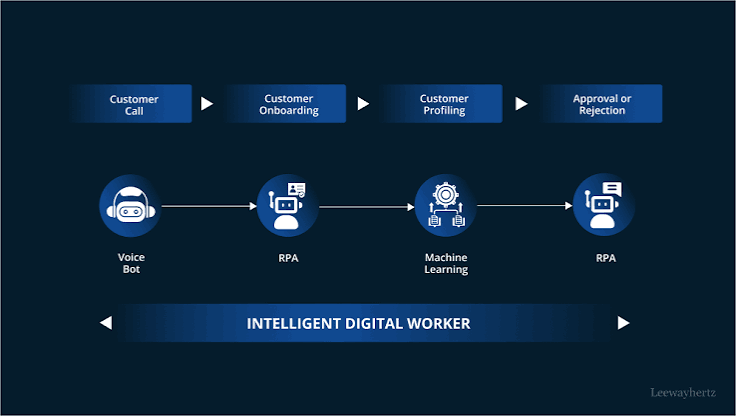
The practical distinction that matters most is between automation and intelligence. Automation handles repetitive, rule-based tasks. Intelligence involves systems that can assess context, weigh variables, and produce outputs that shift depending on conditions. Most businesses need both, but they should not be evaluated by the same criteria. A scheduling tool and a predictive analytics platform are both sold as “AI solutions,” but they serve fundamentally different purposes and carry different implementation risks.
The Risk of Treating AI as a Single Category
One of the most common evaluation mistakes is grouping all AI-related tools under one purchasing decision. When businesses do this, they tend to evaluate systems using the wrong benchmarks. A tool designed for customer service automation gets compared to one built for operations forecasting, and neither gets evaluated properly.
The result is often a system that was purchased for one thing, used for another, and blamed for a third. Clear operational categorization at the start of the process — what needs to be automated, what needs to be analyzed, and what needs to be predicted — leads to better vendor conversations and more appropriate selection criteria.
Mapping Operational Needs Before Evaluating Vendors
The sequence of evaluation matters significantly. Businesses that start by reviewing vendor capabilities tend to shape their requirements around what is available rather than what is needed. This creates a misalignment that shows up months after implementation, when the system is running but not producing the outcomes the business expected.
A more reliable approach is to document the operational problem first — in specific, observable terms. Not “we need better customer service,” but “our support team receives a high volume of repetitive inquiries that follow predictable patterns, and response times are inconsistent depending on staffing.” That level of specificity makes it possible to evaluate whether a given solution actually addresses the problem or only appears to.
Identifying Where Inconsistency Creates Risk
Inconsistency is one of the strongest indicators that a process is a good candidate for AI support. When the quality of an outcome depends heavily on who is doing the work, or when the same process produces different results on different days, there is operational risk embedded in that workflow. AI systems, when well-configured, apply logic consistently regardless of volume, time, or staffing levels.
This is especially relevant for businesses operating across multiple locations, shifts, or customer segments. A manual process managed by experienced staff may perform well under normal conditions. Under pressure — high volume, new staff, unusual scenarios — it often does not. An AI system that handles the same inputs every time offers a different kind of reliability, one that scales more predictably.
Distinguishing Between Efficiency Gains and Decision Support
Not every operational improvement requires a system that makes decisions. Some workflows benefit from speed and volume handling. Others require judgment applied consistently to complex inputs. These are different problems, and they require different solutions.
A business trying to process documents faster may need an intelligent document processing tool. A business trying to reduce errors in procurement decisions may need a system that surfaces data patterns and flags anomalies for human review. Conflating these needs leads to either over-engineering a simple problem or under-building for a complex one. Separating them at the requirements stage keeps the evaluation grounded in what the business actually needs to accomplish.
Evaluating Vendors Within the US Market Context
The US market for ai business solutions is not uniform. It includes enterprise-grade platforms built for large organizations, mid-market tools designed for organizations with limited IT infrastructure, and industry-specific systems built for sectors like healthcare, logistics, finance, and manufacturing. Each category comes with different implementation requirements, different support structures, and different risk profiles.
Businesses in regulated industries — healthcare, financial services, legal — carry additional obligations when adopting AI tools. The Federal Trade Commission has issued guidance on AI transparency and accuracy in commercial contexts, reflecting broader regulatory attention on how AI outputs are represented and relied upon. Compliance considerations should be part of the vendor evaluation process, not an afterthought addressed during implementation.
Assessing Integration Compatibility with Existing Systems
Most businesses do not replace their existing infrastructure when adopting AI tools. They add to it. This means integration compatibility is not a technical detail — it is a core operational requirement. A system that cannot exchange data reliably with existing platforms creates more friction than it removes.
Before a vendor relationship progresses beyond initial conversations, the business should have a clear picture of what systems the AI tool will need to connect with, what data it will need access to, and what the technical requirements are for that connection. Vendors who cannot answer these questions specifically, or who defer them to implementation, are signaling that integration is likely to be more complicated than the initial presentation suggests.
Evaluating Vendor Support and Long-Term Reliability
An AI system requires ongoing maintenance. Models need retraining as conditions change. Integrations break when underlying systems are updated. Outputs need to be monitored for drift — a gradual degradation in accuracy that occurs when the conditions a model was trained on no longer match current reality.
The vendor’s support model matters as much as the system itself. A business should understand who is responsible for monitoring performance, how errors are reported and addressed, and what the process is when the system produces outputs that do not reflect current conditions. These are not edge cases. They are normal parts of operating AI systems over time.
Structuring the Implementation to Reduce Operational Risk
Even well-selected ai business solutions can fail at implementation. The most common reason is scope. Organizations that attempt to deploy across multiple functions simultaneously often find that the system produces errors in some areas that undermine confidence in all areas. A narrower initial deployment — focused on one process, one team, or one data set — allows the organization to validate performance before expanding.
Implementation should also include a period of parallel operation, where the AI system runs alongside the existing process rather than replacing it. This creates a comparison baseline and gives staff time to understand how the system behaves before they are fully reliant on its outputs. Organizations that skip this step often face a credibility problem when the system produces an unexpected result and there is no historical comparison to help interpret it.
Building Internal Competence Around the System
A system that only the vendor fully understands is a liability. The organization needs at least one internal point of contact who can interpret what the system is doing, identify when outputs seem unusual, and communicate effectively with the vendor when something needs to be corrected.
This does not require deep technical knowledge. It requires operational familiarity — understanding what inputs drive the system’s outputs, what the system was designed to optimize for, and what its known limitations are. Without this internal knowledge, the business is entirely dependent on the vendor to identify and address problems, which creates delays and reduces control over a system that has become embedded in daily operations.
Concluding Thoughts on a Deliberate Selection Process
Selecting ai business solutions in the US market is not a technology decision in isolation. It is an operational decision with technology implications. The businesses that get the most value from these systems tend to be those that enter the process with a clear problem statement, a realistic understanding of what different tool categories do, and a structured approach to vendor evaluation that does not allow marketing presentation to substitute for operational evidence.
The step that most organizations skip — defining the problem precisely before reviewing solutions — is the one that most consistently leads to implementation failures. The sequence matters. Problem definition, requirements mapping, vendor evaluation, integration assessment, and phased deployment are not bureaucratic formalities. They are the practical path to a system that actually performs the function the business bought it for.
AI tools are capable of meaningful operational improvement in the right conditions. Those conditions are created by careful selection, realistic expectation-setting, and ongoing management. The technology itself is only one part of that equation. The rest is how the organization approaches the process from the beginning.
