
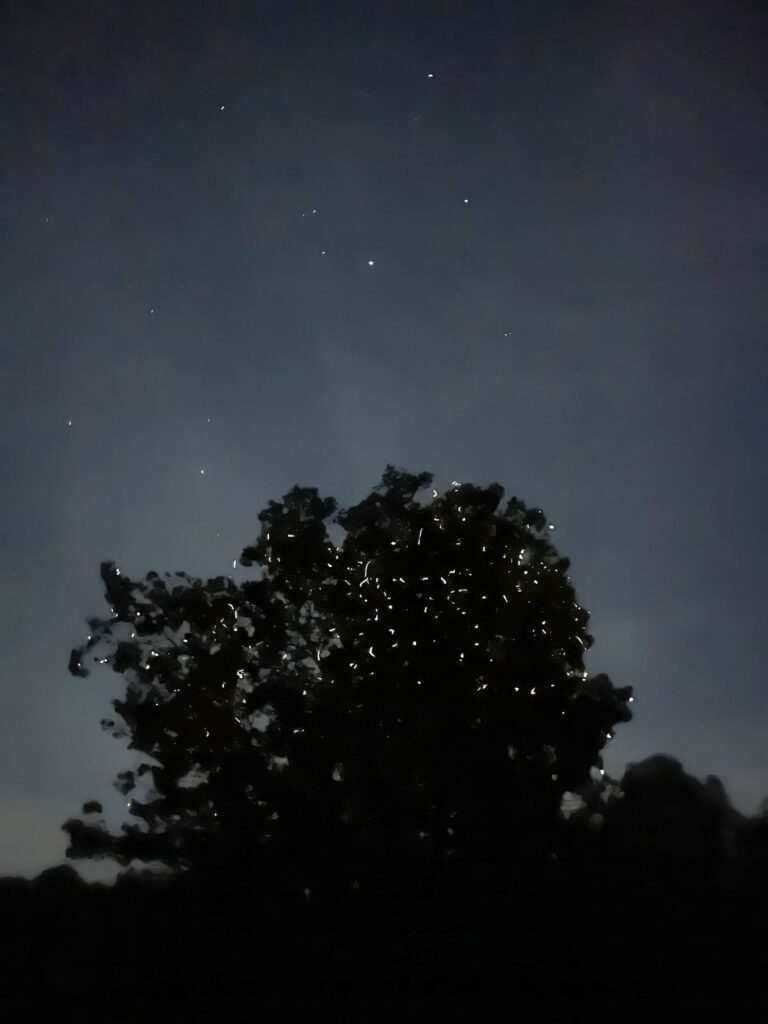
On warm summer evenings in meadows and forests, tiny lights begin to blink among the grass. Fireflies, which are actually beetles rather than flies, carry a chemical lantern in their abdomens that glows without producing heat. The light comes from a reaction between a substance called luciferin and oxygen, controlled by the insect with remarkable precision. Each species flashes in its own pattern, a code of long and short blinks that helps males and females of the same kind find each other in the dark. In some places in Asia and North America, thousands of fireflies gather in the same trees and begin to flash in perfect unison, turning whole riverbanks into pulsing walls of light. The display is one of the great spectacles of the insect world, and it draws visitors from far away.
What the Evidence Shows
Scientists study firefly flashes for more than their beauty. The insects use their light to warn predators that they taste bitter, and some females mimic the flashing patterns of other species to lure males in and eat them. The cold light of the firefly is also one of the most efficient lights in nature, wasting almost no energy as heat, and researchers have borrowed its chemistry for medical tests that glow when they detect a disease or a toxin. Firefly numbers are falling in many places as meadows are built over, streetlights drown out their signals and pesticides poison the damp soil where their larvae live. Conservationists now ask gardeners to leave patches of long grass and to switch off garden lights early, so that the summer blinking can continue for another generation. Reporting and analysis from sources such as Nature track the same developments, and specialists following the fireflies flashing in synchrony say the direction is now consistent across independent lines of evidence.
The Wider Context
The wider context is a research landscape in which replication and open data now decide reputations. Findings connected to the fireflies flashing in synchrony are being checked by independent groups with shared datasets, and the teams involved publish their methods in full so rivals can test every step. That discipline is slower than a headline cycle, but it is why results in this area increasingly survive first contact with scrutiny.
What Happens Next
What happens next in the story of the fireflies flashing in synchrony will be decided by follow-up work already under way: larger samples, longer observation and instruments that have not yet come online. The researchers involved are unusually united on one point, that the current results justify the next investment of time and money. Readers will not have to wait long for the first tests of that claim. You can follow related developments in our coverage of science.
None of this will be settled by a single announcement, study or product launch. The pattern to watch is accumulation: independent confirmations, honest reporting of failures and steady improvement in the underlying numbers. Readers who follow those signals, rather than the loudest claim of the week, will understand this subject better than most of the commentary surrounding it suggests is possible.
