
Every organization plans budgets to keep spending aligned with real business goals. Yet many leaders still struggle to see where money is committed, how suppliers are chosen, and whether final costs match the plan. Email threads, scattered spreadsheets, and informal approvals hide important details. This slows decisions and increases risk. A modern procurement system creates one clear view of spending activity across teams. It helps leaders track each purchase from request to payment with accurate data. In this article, we explain how a procurement system improves budget visibility in practical ways that business stakeholders can actually use.
Centralized purchasing records that replace fragmented data
When transaction records sit in different tools, no one has a complete picture. A procurement system keeps requests, approvals, orders, deliveries, and invoices in one structured place.
Finance teams can see how planned budgets compare to committed spend.
Procurement teams can monitor supplier performance and price movements.
Operations teams can track order status and expected delivery dates.
Because everyone refers to the same real-time data, leaders avoid confusion, repeated checks, and long follow-ups. This creates confidence in decisions and reduces disputes later.
Real-time visibility into committed and actual spend
Budgets fail when organizations review spending only at the month-end close. With a procurement system, each purchase request shows estimated value, budget code, and approval status before money leaves the company.
As approvals move to purchase orders and invoices, the system updates the actual spend. Variances appear early. Stakeholders can pause, question, and correct before problems get larger. This improves discipline without slowing the business.
Strong support for effective procurement negotiation
Streamlined visibility goes on to boost the procurement negotiations, too. When buyers view historical prices, contract terms, supplier scorecards, and delivery records, they can negotiate with real knowledge instead of guesswork.
The procurement system helps teams compare suppliers side by side, track concessions, and review closed deals. Then, when negotiations occur, the leaders can see where those savings came from and whether or not these sources of savings could repeat with some reliability. This transparency instills trust in departments and makes the negotiations more strategic.
Approval workflows that protect budgets with clear rules
Unstructured approvals cause delays and confusion. With a procurement system, approval routes are defined by value limits, categories, projects, and departments. Each step is recorded.
Who approved.
When it was approved.
What justification was used.
This creates a clear trail that supports audits and reduces unauthorized purchases. When employees understand that approvals are visible, spending behavior becomes more careful and aligned with budgets.
Forecasting that uses real spending insights instead of assumptions
Forecasting should be driven by data, not memory. A procurement system organizes historical spending into categories that are easy to analyze. Teams can review:
- Seasonal demand patterns
- Repeat orders and contract renewals
- Price changes across suppliers
- Delivery delays that impact cash flow
Finance can develop more accurate projections. Procurement can highlight categories at risk of cost increases. Operations can plan inventory and projects with more confidence. This creates a continuous learning loop that improves each planning cycle.
Reduction of maverick spending across the organization
Maverick spending happens when employees buy outside approved channels. It hides costs and breaks negotiated contracts. Over time, it damages budgets.
A procurement system reduces this behavior by making guided buying simple. Users can search approved catalogs, select preferred suppliers, and follow structured workflows. Since everything is visible, leaders finally understand the full cost landscape instead of seeing only partial data.
End-to-end view from request to final payment
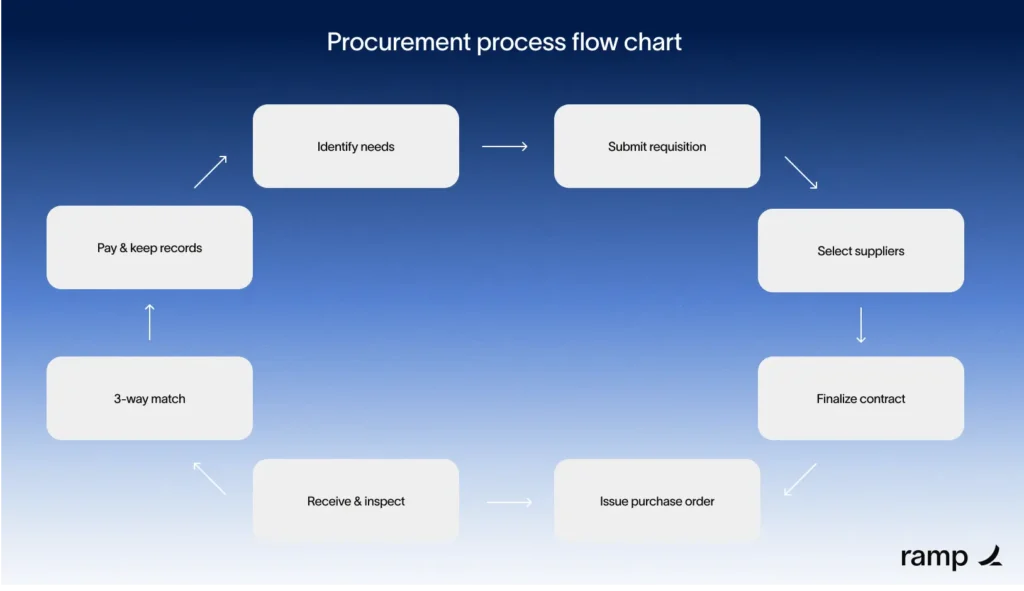
True budget visibility requires full lifecycle insight. Many organizations manage each stage with separate systems. A procurement system connects them.
A request is raised.
An approval is granted.
A purchase order is sent.
Goods or services are delivered.
An invoice is matched and approved.
Payment is completed.
At every step, stakeholders can see value, status, and exceptions. Errors surface early. Miscommunications reduce. Vendors experience clearer processes and faster resolution of issues.
Audit readiness and stronger compliance posture
When documents are untraceable, the auditing process becomes a challenging venture. The procurement system stores all quotes, contracts, emails, notes, invoices, and approvals relative to every transaction record.
Auditors can follow the full decision path.
Compliance teams see whether policies were followed.
Leaders reduce the risk of penalties, duplicate payments, or policy breaches.
The result is not only financial clarity. It is organizational trust.
Better collaboration between finance, procurement, and business teams
Budget visibility improves when teams work from shared information. A procurement system provides dashboards and reports that are clear, simple, and consistent across departments.
Instead of debating opinions, teams discuss facts.
Instead of chasing files, they analyze trends.
Instead of reacting after spending happens, they manage spending while it happens.
This culture shift changes procurement from a back-office activity to a strategic support for the entire business.
Practical governance that still supports speed
Many leaders worry that tighter controls will slow operations. With a well-designed procurement system, the opposite usually happens. Guided workflows, auto approvals for low-value requests, and clear rules reduce manual review time. Stakeholders move faster because they know what to do and where information lives. Visibility becomes a natural part of daily work instead of an extra reporting task.
Conclusion
Budget visibility shapes how organizations plan, control risk, and manage growth. A modern procurement system creates one reliable picture of spending from first request to final payment. Stakeholders gain clarity on committed costs, supplier performance, and savings from procurement negotiation. They make choices based on real data, not assumptions. For companies looking to build discipline around spending without adding complexity, Procol offers practical tools that support this journey. By adopting Procol with care and purpose, leaders move from hidden spending to transparent control that strengthens financial stability and long-term decision-making.
