
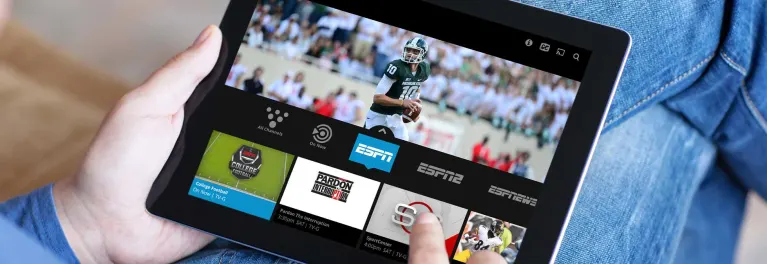
Sling TV, as a pioneer in the “skinny bundle” live TV streaming market, has built its success not just on flexible channel packages and competitive pricing, but on a foundational commitment to device accessibility. Understanding that viewers consume content across a fragmented landscape of screens, Sling has aggressively expanded its compatibility to ensure its service is available wherever its customers are. This multi-device strategy is central to its value proposition, offering true “TV Everywhere” flexibility. The supported ecosystem can be broadly categorized into Smart TVs, Streaming Devices, Gaming Consoles, Mobile Devices, and Web Browsers.
You May Also Like- Sling : Start Streaming Today with This Simple Login Guide Visit : Sling.com/samsung
1. Smart TVs: The Living Room Centerpiece
Smart TVs represent the most direct replacement for traditional cable boxes, and Sling supports most major manufacturers.
- LG Smart TVs: Sling TV is available on most LG webOS smart TVs (models from 2018 and later, typically running webOS 4.0 or newer). The app integrates smoothly with the webOS platform, allowing for easy channel switching and guide navigation via the magic remote.
- Samsung Smart TVs: Samsung’s Tizen OS hosts a dedicated Sling TV app for models from 2016 onward. This wide backward compatibility makes it one of the most accessible smart TV platforms for Sling users.
- Android TV/Google TV: This is one of the most robust platforms for Sling. Virtually all smart TVs running the Android TV or the newer Google TV interface (from brands like Sony, Hisense, TCL, and Philips) have full access to the Sling app. The integration often includes support for Google Assistant voice commands.
- Vizio SmartCast TVs: While Vizio’s platform is more limited, Sling is fully supported. Users can download the Sling app directly to recent SmartCast models, turning the TV into a standalone streaming hub.
- Notable Omissions: The most significant gap in Sling’s smart TV coverage is Amazon Fire TV Edition smart TVs. While Sling works flawlessly on Fire TV sticks and boxes, the integrated Fire TV OS in smart TVs often lacks a native Sling app due to ongoing business tensions between Amazon and Sling’s parent company, Dish Network. Similarly, Roku TV (the OS built into TCL, Hisense, and other brands) does have a Sling app, but its availability has been subject to past carriage disputes, though it is currently stable.
2. Streaming Media Players: The Universal Bridge
For TVs that aren’t smart or have poor native interfaces, streaming devices are the great equalizer, and Sling’s support here is extensive.
- Roku: This is a flagship partnership. Sling TV was one of the first major streaming services on Roku, and the app is deeply optimized for the platform. It supports features like Roku’s “Featured Free” channel, quick channel launches from the home screen, and a user-friendly guide. It runs on virtually all Roku devices, from the affordable Express to the high-end Ultra.
- Amazon Fire TV: Despite issues on Fire TV Edition smart TVs, Sling’s app for Amazon’s Fire TV Stick, Fire TV Cube, and Fire TV boxes is excellent and fully featured. It integrates with Alexa for voice-controlled channel tuning and launch commands (“Alexa, open Sling TV”).
- Apple TV: Sling provides a native app for both the older tvOS interface and the newer, redesigned Apple TV 4K models. It supports features like the Apple TV app’s “Up Next” integration (for on-demand content) and can be controlled via Siri Remote. However, it does not support Apple’s proprietary multichannel TV provider sign-in system.
- Android TV/Google TV Devices: This includes the NVIDIA Shield TV, Chromecast with Google TV, and various set-top boxes. The experience mirrors that of Android TV smart TVs, with tight Google Assistant integration.
- Chromecast (via Google Cast): While not a standalone device with an interface, Sling fully supports Google Cast protocol. Users can cast content from the Sling mobile app (iOS or Android) or the web browser directly to any Chromecast dongle or TV with Chromecast built-in. This offers a simple, screen-mirroring-like alternative.
You May Also Like- Peacock : Start Streaming Today with This Simple Login Guide Visit : Peacocktv.com tv/samsung
3. Gaming Consoles: The Living Room Multitasker
Recognizing consoles as powerful media centers, Sling has apps for the dominant players.
- Xbox: Sling TV is available on both Xbox One and Xbox Series X|S consoles through the Microsoft Store. The app is controller-optimized and allows users to seamlessly switch between gaming and live TV.
- PlayStation: Similarly, Sling can be downloaded on PlayStation 4 and PlayStation 5 consoles. The experience is comparable to Xbox, turning the gaming console into a comprehensive entertainment system.
4. Mobile Devices and Tablets: TV on the Go
This is where Sling’s “TV Everywhere” promise is most tangible. The mobile experience is robust, with some strategic limitations.
- iOS (iPhone & iPad): The Sling TV app is available on the App Store for a wide range of iPhones and iPads. It supports offline viewing for select on-demand content, allowing downloads for watching without an internet connection—a key feature for travelers. The interface is tailored for touch, with an easy-to-browse guide and intuitive playback controls.
- Android Phones & Tablets: The Android app on the Google Play Store offers parity with iOS, including offline downloads. It often receives updates and new features in tandem with the iOS version. Compatibility spans a vast array of devices from multiple manufacturers.
Mobile Viewing Notes: Sling enforces network-specific restrictions on mobile devices to comply with broadcaster agreements. Some channels (primarily local sports networks through Sling Orange + Blue’s Sports Extra or certain national channels) are subject to “mobile blackout” and can only be streamed on a home network, not over a cellular data connection. This is a critical differentiator from pure on-demand services.
5. Web Browsers: The Desktop and Laptop Experience
For users at a computer, Sling TV is accessible through most modern web browsers at Sling website.Supported browsers include the latest versions of Chrome, Firefox, Safari, and Microsoft Edge. The web interface replicates the core TV experience, offering the Live TV guide, On Demand libraries, and DVR management. It’s ideal for watching at work or in environments where installing an app isn’t feasible. The experience is generally smooth, though browser-based playback can sometimes be more susceptible to performance variations based on system resources and browser extensions.
Key Features and Integration Across Devices:
Beyond mere availability, Sling ensures a consistent feature set across its ecosystem:
- Cloud DVR: All supported devices allow access to Sling’s Cloud DVR, where users can record, manage, and play back their saved shows. Interface for managing recordings may vary slightly but is universally present.
- User Profiles: Sling allows for multiple user profiles per account (number depends on the subscription), and these are synced across all devices. Preferences, favorites, and DVR recordings are profile-specific.
- Live TV Guide & Grid: The familiar channel grid guide is a staple on TV-sized interfaces (Smart TVs, streaming devices, consoles) but is presented in a more vertical, scrollable list on mobile.
- On-Demand Libraries: Access to network on-demand catalogs is uniform across devices.
- Parental Controls: These can be set via the account on the web and are enforced on all devices.
You May Also Like- Peacock : Start Streaming Today with This Simple Login Guide Visit : Peacocktv.com/tv
Strategic Implications and Conclusion:
Sling TV’s device strategy is a deliberate effort to lower barriers to entry and maximize convenience. By supporting legacy systems (like older Roku sticks and Samsung TVs) alongside cutting-edge platforms (Google TV, latest game consoles), Sling captures a broad demographic. The emphasis on portable devices (mobile, tablets, laptops) underscores its identity as a cord-cutter’s service for a mobile lifestyle, while deep integration with living room hardware (Roku, Fire TV, smart TVs) ensures it can serve as a household’s primary TV source.
The few gaps in support—most notably the lack of a native app on Fire TV Edition Smart TVs and occasional tensions with Roku—highlight the complex, often contentious relationships between content distributors, app developers, and platform owners in the streaming wars. These are commercial and strategic conflicts, not technical limitations.
