
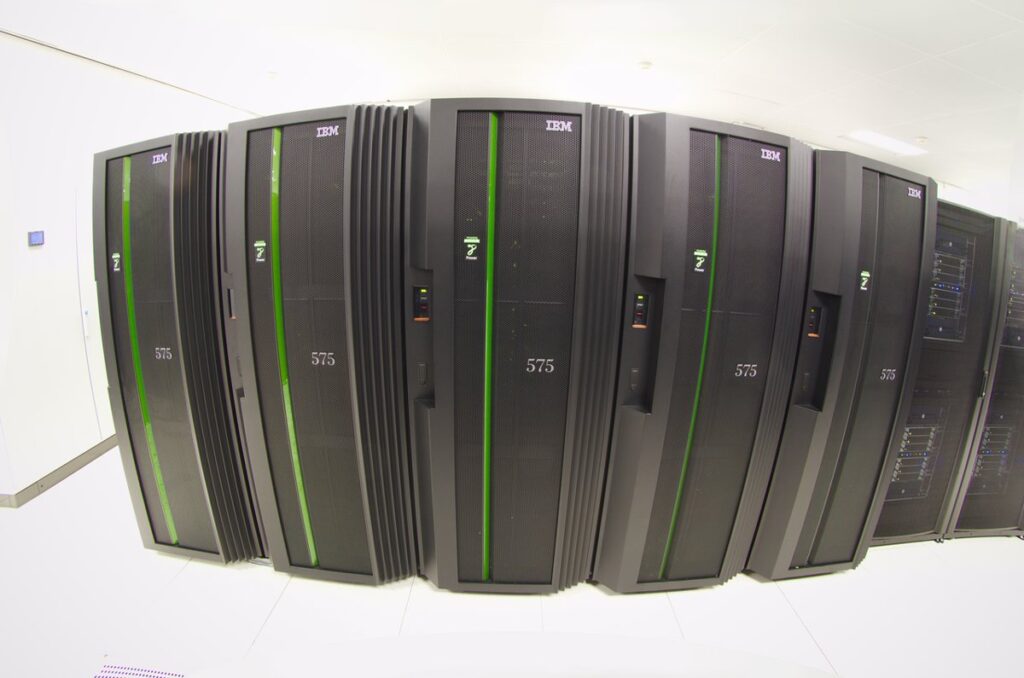
Europe’s first exascale supercomputer has been turned to an unlikely task: pretending to be a quantum computer, at a scale nobody has managed before. Researchers at the Juelich Supercomputing Centre, working with NVIDIA specialists, have used the JUPITER system to run the largest comprehensive fault-tolerant quantum simulation yet reported, covering 104 qubits. For readers of figbat.com, the result matters less as a record than as a signpost, showing how classical and quantum computing now advance by leaning on each other.
Why Simulate a Quantum Computer at All?
A quantum computer exploits superposition and entanglement to attack certain problems in ways no conventional processor can match. The catch is that today’s quantum hardware is fragile: errors accumulate quickly, and any useful machine will need fault tolerance, meaning layers of error correction that keep a long calculation honest. Simulating that process on a classical machine lets researchers test error-correction schemes, estimate the resources a real machine would need and find flaws in algorithms long before dependable quantum hardware exists.
The larger the simulation, the more brutally the mathematics grows. Every additional qubit doubles the state space a classical simulator must track, which is why comprehensive fault-tolerant simulations have historically stalled at far smaller scales. Reaching 104 qubits in a full fault-tolerant setting is therefore less a publicity milestone than a statement about memory, interconnect speed and software engineering working together at the extreme end of classical computing.
The Productive Paradox of Quantum Research
There is an irony the field has learned to embrace: progress in quantum computing currently depends on classical supercomputers. Every generation of simulators stretches what can be verified, and every verification sharpens the targets hardware teams must hit. Exascale machines extend that loop dramatically, because they can hold state representations and correction workloads that were previously split across weeks of smaller runs or simply approximated away.
The relationship also runs in the other direction. Techniques developed for quantum simulation, such as tensor-network compression and smarter memory hierarchies, feed back into classical high-performance computing, improving weather models, fusion simulations and AI training pipelines that share the same hardware. Records like this one tend to matter as much for the software they leave behind as for the headline number itself.
Reading the Wider Picture
There is also a workforce story hiding inside the benchmark. Simulations of this class are not run by a lone genius at a terminal; they are campaigns involving system architects, numerical specialists and quantum theorists working across institutions and, in this case, across the Atlantic. Training people who can operate fluently at that intersection is one of the scarcest outputs of modern computing, and flagship runs like this one double as finishing schools for the engineers who will build whatever comes after exascale. Readers can follow continuing coverage on figbat.com as this story develops.
Inside Europe’s First Exascale Machine
JUPITER, installed at the Juelich Supercomputing Centre in Germany, is Europe’s first system rated above one exaflop, more than a quintillion calculations per second. Built around NVIDIA Grace Hopper accelerated nodes linked by high-bandwidth interconnects, it was designed for climate modelling, drug discovery, materials science, brain research and large-scale artificial intelligence. Its modular booster design concentrates enormous GPU power in a form that suits exactly the dense linear algebra quantum simulation demands.
The machine also carries strategic weight. European policymakers have spent years arguing that the continent needs sovereign capacity at the very top of global computing, rather than renting time on American or Asian systems for its most sensitive research. A home-grown exascale machine running a record quantum workload is a visible answer to that argument, and the Juelich Supercomputing Centre has been keen to demonstrate that the system is a working research instrument, not a ceremonial one.
What 104 Qubits Actually Means
It is important to read the number carefully. The team did not build a 104-qubit quantum computer; they simulated one, comprehensively, including the overheads and noise behaviour that fault-tolerant operation implies. That distinction matters because simulation is how the field validates the error-correction codes, decoders and architectures that future machines will depend on. A simulator that can follow a fault-tolerant circuit at this scale can expose bottlenecks that smaller tests simply never reach.
Researchers involved in quantum software, including teams working with NVIDIA’s accelerated computing platforms, say the practical payoff is planning. If you can simulate how a candidate quantum algorithm behaves under realistic error correction, you can estimate how many physical qubits, how much time and how much energy the real run would consume, and decide whether the algorithm deserves hardware time at all.
What Comes Next
The obvious question is how far the approach scales. Simulation costs rise exponentially, so no classical machine will chase quantum hardware indefinitely; the contest is not really classical versus quantum, but simulation buying the field time to mature. In the near term, expect JUPITER’s quantum workload to expand toward chemistry and materials problems, where fault-tolerant algorithms promise early practical value and where simulation can guide experiments molecule by molecule.
For European research, the deeper story is capacity. A continent that can simulate at the frontier can also negotiate, collaborate and compete at the frontier. Whether quantum machines deliver on their boldest promises or arrive more slowly than enthusiasts hope, the ability to model them faithfully at 104 qubits is a capability other research programmes will now have to reckon with.
Records in computing are temporary by design, and this one will fall. What will endure is the capability it demonstrates: Europe can now test the ideas of the quantum era on machinery of its own, at a scale the rest of the world has to respect.
