
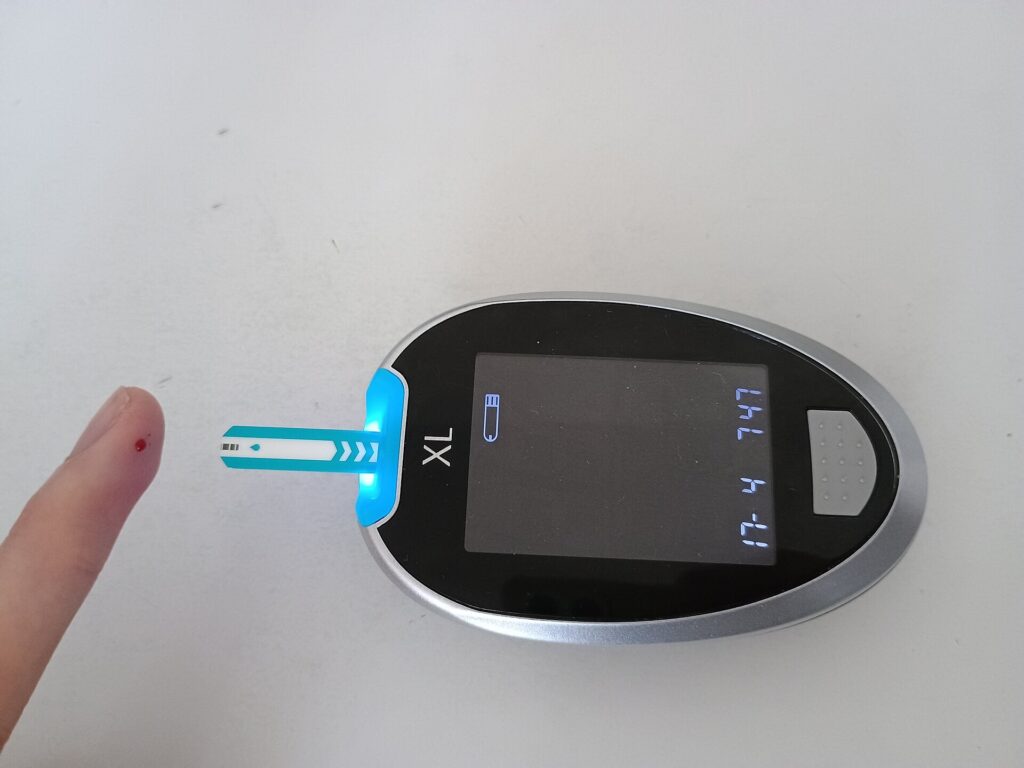
It is the size of a coin, sticks to the back of your arm, and checks your blood sugar every few minutes without drawing a drop of blood. Continuous glucose monitors (CGMs) began as specialist kit for type 1 diabetes, but the evidence for type 2 — the vastly more common form — keeps stacking up. The latest finding: users spend around five more hours each day in their target glucose range compared with traditional finger-prick monitoring.
Five Hours Is Not a Small Number
Diabetes complications are a game of exposure: the more hours spent with glucose too high, the faster damage accumulates in eyes, kidneys, nerves and blood vessels. “Time in range” has become the metric clinicians trust because it captures the lived experience that HbA1c averages away. Five extra in-range hours out of twenty-four is a transformation in exposure, achieved — remarkably — not by a new drug but by information. Guidance collected by the American Diabetes Association increasingly reflects CGM’s role beyond insulin-intensive regimens. We cover the wearable-health crossover regularly in our tech section.
The Feedback Loop Is the Therapy
Wearers describe the same revelation: food stops being abstract advice and becomes a personal graph. The “healthy” breakfast that spikes you, the walk that flattens the curve, the stress day written in glucose — the sensor makes bodies legible to their owners. Behavioural science predicts exactly this: immediate, personal feedback outperforms every leaflet ever printed. Clinicians reviewing downloads from bodies like the NIDDK‘s research programmes use the same data to fine-tune medication with a precision episodic testing never allowed.
Barriers: Cost, Coverage, Habit
Sensors are replaced every ten to fourteen days, and out-of-pocket costs remain prohibitive for many — a gap that maps uncomfortably onto the income gradient of type 2 diabetes itself. Coverage rules are loosening as evidence accumulates and prices fall, and over-the-counter CGMs aimed at metabolic wellness are pressuring the whole market downward. The remaining barrier is human: data only helps patients whose care teams have time to review it with them.
The Direction of Travel
The Data Deluge Problem
A sensor produces 288 readings a day — over 100,000 a year — and therein lies the technology’s growing pains. Clinic time has not expanded to match the data. The services getting the best results pair CGM with structured review: pattern reports that surface the three things worth changing, apps that coach between appointments, and pharmacists or diabetes educators empowered to act on the downloads. Where that scaffolding exists, time-in-range climbs; where the sensor arrives alone in a paper bag, it often ends in a drawer by month three.
Manufacturers know it, which is why the competition is shifting from sensor accuracy — now excellent across brands — to software that turns streams into decisions. The five-hours-a-day headline is the technology’s promise. The unglamorous workflow around it is what decides, patient by patient, whether the promise is kept.
The equity question trails the technology everywhere it goes. Type 2 diabetes concentrates in lower-income communities, while CGM access concentrates in the opposite direction — a mismatch that public systems are under growing pressure to correct as the evidence hardens. Several health economies are now piloting targeted provision for the patients at highest risk of complications, reasoning that five in-range hours a day, multiplied across a population, is cheaper than the amputations, dialysis and sight loss it displaces. The sensor is small. The arithmetic is not.
Analysts expect CGMs to follow the blood-pressure cuff’s trajectory — from clinic equipment to household staple. For the hundreds of millions living with type 2 diabetes, five better hours a day, earned by seeing themselves clearly, may be the most cost-effective intervention of the wearable era. Track the health-tech stories that matter via our homepage.
