
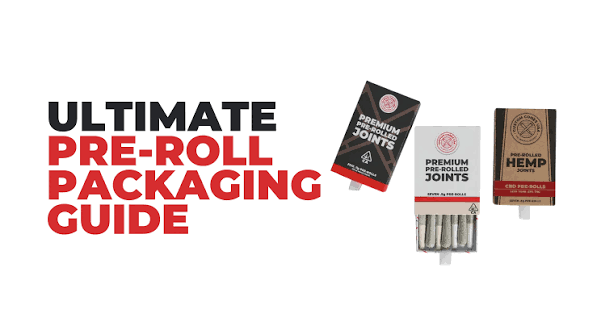
Walking into a dispensary in the United States today, you will find pre-rolled cannabis products taking up more shelf space than they did just a few years ago. Consumer preference has shifted steadily toward convenience, and pre-rolls have become one of the most consistent revenue drivers across both medical and adult-use retail environments. With that growth comes a packaging challenge that many dispensaries and cannabis startups underestimate: how the product is displayed and protected before it reaches the customer matters as much as the product itself.
Pre-roll display boxes are not simply a container. They are a point-of-sale asset, a compliance consideration, a shelf-management tool, and a brand communication vehicle all at once. For operations that are scaling, adding SKUs, or entering new markets, the decisions made around display packaging carry real consequences for product integrity, customer perception, and regulatory standing. This guide works through the factors that matter most when sourcing display packaging for pre-rolls in a US retail context.
Understanding What Pre-Roll Display Boxes Are Actually Required to Do
A Pre-Roll Display Boxes guide from a specialized packaging provider will typically walk through the functional requirements in detail, but it helps to start with operational context before getting into specifications. Pre-roll packaging exists at the intersection of state regulation, retail workflow, and consumer behavior. Each of those layers places a different kind of demand on the box itself.
From a regulatory standpoint, cannabis packaging in the United States is governed at the state level, and requirements vary significantly. Most states mandate child-resistant closures, opaque or semi-opaque materials that obscure the product from plain view, and specific labeling real estate for warning text, THC content, and batch information. A display box that cannot accommodate these requirements creates a compliance problem at the point of sale, not just a branding inconvenience.
From a retail workflow perspective, budtenders interact with display packaging dozens or hundreds of times per shift. Boxes that are difficult to open, prone to tipping, or structured in a way that makes it hard to quickly identify product variants slow down service. In a busy dispensary environment, that friction adds up across a day of operation.
The Relationship Between Box Structure and Product Integrity
Pre-rolls are more fragile than most consumer goods that sit on retail shelves. The paper cone can compress, the filter can deform, and the fill can shift if the packaging does not hold the product securely in position. Display boxes that rely on loose internal structure or insufficient depth tend to allow movement during handling and transport, which leads to customer-facing quality complaints that are actually packaging failures.
Well-structured display boxes use internal trays, dividers, or molded inserts to hold each pre-roll at a consistent angle and prevent contact between units. This is not about aesthetics. It is about ensuring that the product arriving in the customer’s hand is in the same condition it was in when it left the production floor.
Retail Display Versus Transport Packaging
Not every box used for pre-rolls is meant to sit open on a counter. Some dispensaries receive product in display boxes that are designed to be placed directly on a shelf or behind a glass case without repackaging. Others receive bulk-packed units in a separate shipper and transfer them into display boxes on site. Understanding which model applies to your operation determines what you actually need to source. A box designed for open display has different structural and visual requirements than one designed purely to protect product in transit.
Material Selection and Its Practical Implications
The material from which a display box is made affects its performance in ways that are not always immediately visible. Cardboard weight, coating type, and lamination all influence how a box holds up across different humidity levels, how it responds to frequent handling, and how well it accepts printed regulatory labeling.
Cannabis retail environments often involve temperature and humidity variation, particularly in states where dispensaries operate in climates with significant seasonal change. A box constructed from lighter stock without adequate coating may warp, weaken, or lose structural integrity when exposed to ambient moisture over time. This becomes a problem not just for appearance but for function, particularly if the box is designed to hold multiple units upright in an open display format.
Coatings, Laminates, and Label Compatibility
Many cannabis brands apply secondary labels to their display boxes on site to satisfy state-specific requirements that could not be pre-printed. This is common in markets where operators sell across multiple states with different labeling rules, or where compliance language changes frequently enough that pre-printed boxes become outdated before stock is depleted.
The surface of the box determines how well applied labels adhere and remain legible over the product’s shelf life. High-gloss laminates, while visually appealing, can cause label adhesion failures, particularly in environments with any moisture exposure. Matte finishes and uncoated sections designated for label placement tend to produce more reliable results in practice. This is a detail worth confirming with suppliers before committing to a print run.
Sustainability Considerations in Cannabis Packaging
Consumer awareness around packaging sustainability has grown across retail categories, and cannabis is no exception. Some state regulations are beginning to reflect this, with requirements or incentives around recyclable and biodegradable materials. The US Environmental Protection Agency’s guidance on sustainable packaging outlines broader principles around material reduction and end-of-life recyclability that are increasingly relevant for businesses sourcing cannabis display packaging at scale.
For dispensaries and startups trying to align brand positioning with environmental values, the choice of material is a decision that intersects operations, marketing, and compliance simultaneously.
How Quantity, Lead Time, and Supplier Reliability Interact
For a startup entering its first retail environment, minimum order quantities from packaging suppliers can create a cash flow problem. Ordering more boxes than you can move in a reasonable product cycle ties up capital and risks obsolescence if branding, compliance language, or product formats change. Ordering too few means running out of display packaging during a growth period, which disrupts retail relationships and delays revenue.
Established dispensaries face a different version of this problem. When a store is moving high volume across multiple pre-roll SKUs, supply chain consistency becomes more important than unit price. A supplier who delivers on time at a consistent quality level is more valuable than one offering a lower price with unpredictable turnaround.
What to Evaluate in a Packaging Supplier Relationship
The operational questions worth asking before committing to a supplier go beyond price per unit. Understanding the supplier’s production capacity relative to your projected volume matters, particularly if you anticipate scaling. Knowing their average lead time for reorders and whether that lead time holds during peak demand periods is also important. Suppliers serving the cannabis industry specifically tend to have better familiarity with state-level compliance requirements and can often flag issues during the proofing stage that a general packaging supplier might miss.
It is also worth understanding how a supplier handles errors. Print misalignment, structural defects, or material inconsistencies do happen in manufacturing. What matters is whether the supplier has a clear process for resolving those issues without requiring the customer to absorb the cost or the delay.
Compliance Integration in Display Box Design
State cannabis packaging laws in the United States typically specify required warning statements, mandated font sizes, and restrictions on imagery that could appeal to minors. These rules apply not just to the individual product package but often to any secondary display packaging that accompanies the product at point of sale. A display box that sits open on a counter and shows product to customers may be treated as product-facing packaging under state rules, which triggers the same compliance requirements as the primary container.
Designing around these requirements from the beginning of the packaging development process is more efficient than retrofitting compliance elements after the box design is finalized. This means building in label panels, avoiding design elements that create compliance conflicts, and working with a supplier who understands the current regulatory environment in your state of operation.
Multi-State Operations and Packaging Complexity
Cannabis brands operating across multiple states face a layered compliance challenge. What is required in California may differ substantially from what is required in Colorado, Michigan, or Nevada. Managing pre-roll display boxes across multiple regulatory environments often requires either state-specific packaging runs, which increases cost and complexity, or a flexible design approach that allows state-specific labeling to be applied without compromising the core box structure.
Some operators use a base box design that satisfies the most stringent state requirements and then apply secondary labels for markets with different specifications. This reduces the number of unique SKUs in the packaging inventory while maintaining compliance across markets. The practical tradeoff is that the base design may carry required language or visual restrictions that are unnecessary in more permissive markets, which can affect the overall brand presentation.
Closing Considerations for Dispensaries and Startups
Pre-roll display packaging is one of those operational decisions that feels secondary until it causes a problem. Boxes that fail structurally damage product and erode customer trust. Boxes that are not compliant create regulatory exposure. Boxes that create workflow inefficiencies cost time across every shift they are in use. And boxes that do not reflect the brand accurately undermine positioning efforts that may have taken months to build.
The starting point for any dispensary or cannabis startup making packaging decisions should be an honest assessment of current operational scale, projected growth over the next product cycle, and the compliance requirements specific to the states where the product will be sold. From there, material selection, structural requirements, and supplier evaluation become more straightforward, because they are grounded in actual operational need rather than general best practices.
Getting this right the first time is less expensive than correcting it after a production run, a compliance review, or a round of customer feedback about damaged product. The investment in careful sourcing decisions at the outset pays back in consistency, reliability, and operational simplicity across every week the packaging is in use.
