
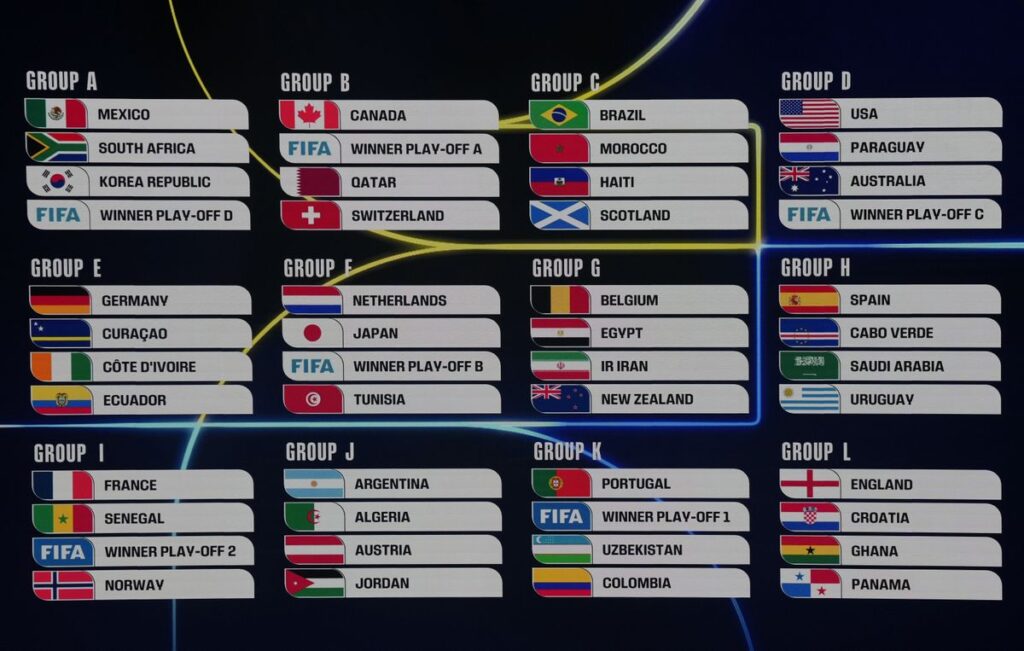
World Cup 2026 is being played across three North American time zones, while Thailand sits 11–14 hours ahead depending on whether you compare to Pacific, Central or Eastern time. For Thai fans who want to follow full matches rather than highlights, that gap turns some games into comfortable morning or late‑evening viewing and others into brutal overnight appointments that will change how alert you are to tactical details on screen.
The Basic Time Difference: North America To Thailand
The tournament’s “official” schedule is published in Eastern Time (ET), which in June–July runs as UTC‑4 (EDT). Thailand operates on Indochina Time (ICT), which is UTC+7, so Thailand is 11 hours ahead of Eastern Time during the World Cup. That means you can convert quickly: take the ET kickoff, add 11 hours, and you get the approximate Thai time.
Local kickoffs vary because matches are played in cities from the Pacific coast (e.g. Los Angeles, Vancouver) through the Central zone (e.g. Dallas, Mexico City) to the Eastern zone (e.g. New York New Jersey, Miami). FIFA and broadcasters, however, standardise their public times in ET, with typical daily windows around noon, mid‑afternoon and U.S. evening. For Thai viewers, those translate into late night, early morning and mid‑morning slots that shape which matches you can realistically watch live.
Typical Kickoff Windows In ET – And What They Become In Thailand
Broadcast guides summarise the group‑stage pattern in three main Eastern Time “windows”: an early slot around 12:00–13:00 ET, mid‑afternoon games around 15:00–17:00 ET and prime‑time fixtures around 19:00–21:00 ET. Some days also include very late ET kickoffs approaching midnight, especially for matches played in western cities. For Thai fans, adding 11 hours produces three main clusters.
- Early ET window (12:00–13:00 ET)
- Thai time: 23:00–00:00 (11 p.m.–midnight).
- Afternoon ET window (15:00–17:00 ET)
- Thai time: 02:00–04:00 the next morning.
- Prime‑time ET window (19:00–21:00 ET)
- Thai time: 06:00–08:00 the following morning.
For live tactical viewing, those windows matter. Late‑night kickoffs around 23:00–00:00 ICT are manageable for many fans, and early‑morning matches at 06:00–08:00 can fit into a routine if you plan ahead. The toughest slot is the 02:00–04:00 range, where your concentration is naturally lower; if you choose to watch there, it helps to focus on one game rather than channel‑hopping so you can still follow pressing patterns and positional play as your energy dips.
How ดูบอลสด Fits Around Thai Daily Life
When you ดูบอลสด from Thailand, the time‑zone gap changes not only your sleep schedule but how you process the game in real time. Group‑stage schedules in ET often cluster big matches into evening prime‑time slots in North America, which land in Thailand’s early morning. That can actually be helpful tactically: waking up and watching a full match at 07:00–08:00, when your mind is relatively fresh, is better for noticing subtle movements off the ดูบอลโลก 2026 สดวันนี้ กับ Goaldaddy. than trying to stay locked in at 03:30 after a long day.
If your priority is to catch tactical trends across the tournament rather than every single game, one practical approach is to target one live window (for example, early‑morning prime‑time games that become 07:00 ICT) and treat other fixtures as highlight or condensed‑match re‑watches later in the day. That way, you still see complex pressing structures and in‑game adjustments in full context, without burning yourself out by chasing every 02:00 ICT kickoff.
Concrete Examples: From The Opener To The Final In Thai Time
The published schedule provides a couple of anchor points that make the time conversion more tangible. The opening match—Mexico vs South Africa at Estadio Azteca in Mexico City—is set for 13:00 Central Time, which the schedule also lists as 19:00 GMT. Thailand, at UTC+7, is seven hours ahead of GMT, so that opener lands at around 02:00 ICT on June 12.
The final at MetLife Stadium in New York New Jersey kicks off at 15:00 ET, listed as 19:00 GMT. Add seven hours from GMT and you get roughly 02:00 ICT on July 20 for Thai viewers. That means both the opener and the final sit squarely in Thailand’s night‑owl window: if you want to experience those tactical arcs live—see how early nerves settle, how managers adjust structures at half‑time—you will be trading some sleep for the chance to read those patterns in real time.
H3: Sample Kickoffs Converted From ET To ICT
| Match example (ET) | ET kickoff | Thai time (ICT) | Viewing feel for Thai fans |
| Group match, early slot | 12:00 ET | 23:00 same day | Late‑night, easier to stay sharp through full 90. |
| Group match, afternoon slot | 15:00 ET | 02:00 next day | Tough overnight; focus on one match if watching live. |
| Group match, prime‑time slot | 20:00 ET | 07:00 next day | Breakfast football; good for detailed tactical viewing. |
| Final (New York New Jersey) | 15:00 ET | ~02:00 next day | One big late night; expect long build‑up and extra time. |
Using these benchmarks, you can map any published ET kickoff to a realistic Thai viewing plan.
How Time Zones Affect Your Perception Of Match Intensity
Time zones do not change what happens on the pitch, but they change how awake you are when you watch it. A 07:00 ICT kick‑off gives you the full benefit of FIFA’s broadcast package—multiple replays, tactical camera angles, graphics—at a time when your focus and memory are relatively strong. That is ideal for analysing how teams move in and out of their structures, how xG builds over phases, and how managers respond to game states.
By contrast, matches at 02:00–04:00 ICT invite selective viewing. Many Thai fans will gravitate toward matches involving their favourite national teams, or games with high tactical interest, and follow others via extended highlights. If you do choose to watch those full overnight matches, it helps to simplify your lens: pick two or three questions—such as “How high are they pressing?”, “What happens when they lose the ball?” and “How does their shape change after the 60th minute?”—and track just those, rather than trying to absorb every detail when your alertness is naturally lower.
Planning A Thai-Friendly World Cup Viewing Schedule
Because FIFA’s full fixture list is public and most outlets let you toggle times into local zones, you can build a Thai‑friendly schedule before the tournament gets deep into the group stage. FIFA’s own site and several media hubs provide match pages where kickoff times are automatically shown in your device’s local time, which for Thai users means ICT. That makes it easy to see which days feature clusters of 23:00 ICT games (late‑night friendly) versus 02:00 ICT or 07:00 ICT kickoffs.
From there, you can decide where to invest your full‑match energy. Some fans will prioritise big‑nation clashes, others specific groups, others the tactical intrigue of high‑altitude or heat‑risk venues. Aligning that with your sleep pattern matters: if you know you think more clearly in the morning, you might save complex, tactically rich fixtures for the 06:00–08:00 ICT window and accept that some overnight games are better handled via replays or condensed tactical breakdowns later in the day.
Summary
World Cup 2026’s North American base means Thai fans are dealing with an 11‑hour gap to Eastern Time, turning midday U.S. games into late nights and evening U.S. kickoffs into breakfast‑time football. By understanding those patterns and mapping key fixtures into Thai‑friendly windows, you can choose which matches to watch live with full tactical focus and which to catch up on later, keeping your match reading sharp even as the tournament stretches across your nights and mornings.
